Contact PII | News
About PII Corporate Services Public Agencies Employment Law Civil Law Criminal Law International Human Rights

ROHMAN ON APPOINTING A SPECIAL PROSECUTOR
August 24, 2009
Daily Journal
Independence Is Key For Special Prosecutor On Interrogation Tactics
Keith Rohman

The intriguing possibility that Attorney General Eric Holder may appoint a special prosecutor to look into Bush administration interrogation practices is seen as good news by many interested in government accountability.

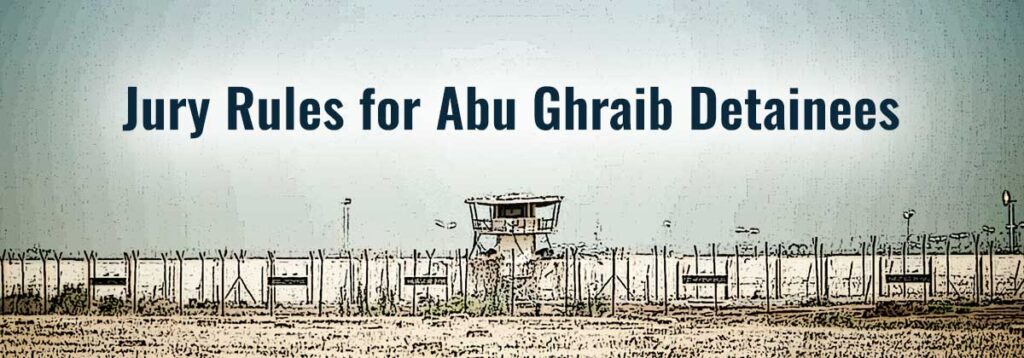
While this would be an important step forward, it is no guarantee that the truth of this dark period in our history will come out. For proof of this dilemma we need look no further than the 14 separate investigations conducted by the Department of Defense into allegations of detainee abuse at Abu Ghraib and other locations. More than 1,700 witnesses were interviewed and more than 15,000 pages of documents assembled and reviewed, yet at the end of the day, almost all of the key findings were rejected by outside observers in the government, military and news media.

The Defense Department investigations provide a guide to the mistakes the attorney general and the special counsel should avoid. The selection of a truly independent special counsel is the critical first step. This lead investigator must be functionally independent of the organizations they are investigating; in this case, the Department of Justice, the Defense Department, the Armed Forces, particularly the Army, and various intelligence agencies.

But independence is not just an issue of a person's position in a chain of command; it is also an attitude and a perspective. Investigators must be free of direct institutional loyalties, and emotionally and intellectually independent of the organization. One of the Defense Department investigations was conducted by a high-ranking panel of former secretaries of defense, including Republican James Schlesinger and Democrat Harold Brown. While functionally independent, the Schlesinger panel was tightly bound to the Defense Deparment by history and experience, and its ineffectual findings reflected as much.

The investigators should draw on a balance of perspectives from outside and inside government. There is a need to have investigators who are familiar with the agencies they are investigating, but the goal is a balanced team from different backgrounds and perspectives. The Defense Department investigators were almost all active-duty military officers. There were almost no outside subject matter experts in investigating war crimes, in spite of the fact that such experts were readily available. Numerous U.S. judges, former criminal prosecutors and law enforcement officials have gained experience in investigating and prosecuting human rights abuses for the International Criminal Court at the Hague, and the various war crimes tribunals.

An effective investigative team should have functional and emotional independence from the subject agency, and include both internal staff familiar with the organization and culture, along with outside subject matter experts who can provide perspective and expertise from the wider community.

The issue of scope is critical. The special counsel regulations call for the attorney general to provide "a specific factual statement of the matter to be investigated," and it is here that the rubber meets the road. Most of the Defense Department investigations had highly restricted scopes that prevented them from fully investigating the facts. One was limited to the military police. One was limited to military intelligence. One was limited to merely reviewing the 13 prior investigations. None had real authority to investigate executive branch's complicity in the abuse. None investigated the involvement of intelligence organizations like the CIA. The new special counsel investigation must have the authority to follow leads wherever they go, no matter where they lead within the government.

A related issue is the choice of witnesses. The Defense Department investigations focused overwhelmingly, and in some cases exclusively, on interviews with military personnel. One high-level investigation interviewed and surveyed over 650 soldiers from the ranks of private to major general at 26 different locations in Iraq, Afghanistan and the United States, but interviewed no detainees. Another Defense Department investigation used a team of 26 personnel to conduct over 170 interviews, of which only three were with detainees. This is the equivalent of civilian law enforcement conducting a rape or assault investigation without interviewing the victim. Inevitably, this practice skews the investigation toward the military, and critical evidence and insights are lost. The special counsel should reach out beyond the military and intelligence communities as it gathers evidence. This should include the actual victims of the abuse, as well as others who may have relevant information, including human rights groups that have studied these issues closely.

Another question is how to approach witnesses. Investigators should consider who the witnesses are, and what their barriers to disclosure are. This is particularly important in military and intelligence organizations where the witnesses' loyalties to their own units and comrades may be stronger than their obligations to follow orders and cooperate with an investigation. Beyond this "code of silence," investigators must understand the legal implications that witnesses face. For instance, soldiers can be charged for whatever misconduct they engage in, but also for failing to report the misdeeds of others, even when they did not participate in that misconduct.

This did not happen in the Defense Department investigations. The reports provided no indications that the investigators recognized or acknowledged these barriers to disclosure, or took any steps to address them. In fact, there is evidence that the investigators exacerbated these problems by publicly calling out those it wanted to conduct further interviews with, or threatening to prosecute those who actually provided evidence. As one military intelligence sergeant told Congress, "I was told that the honor of my unit and the Army depended on either withholding the truth or outright lies. ... Everything I saw and observed at Abu Ghraib and in Iraq convinced me that if I filed a report [about the abuse], I wouldn't be listened to, that it would be covered up."

In spite of the flaws in the Defense Department investigations, they still contained evidence that responsibility for the abuse went far up the chain of command, evidence that the reports studiously ignored or glossed over. The Schlesinger panel report noted that during a period of some of the worst abuses, "a senior member of the National Security Council staff visited Abu Ghraib, leading some personnel at the facility to conclude ... [that] the White House was interested in the intelligence gleaned from their interrogation reports." Another investigation reported that interrogators "believed the thirst for intelligence reporting to feed the national level systems was driving the train" at the prison. The investigations also report that intelligence agencies were very active at the prison. In spite of these clear leads, none of the investigators interviewed anyone in the executive branch or any of the intelligence agencies. The special counsel must be empowered to follow all reasonable leads wherever they lead.

The truth is, the wrong investigation will be worse than no investigation at all. Given the rush of events and political pressures, this may be our last chance for a systematic examination to set the historical record straight.

A less than fully independent special counsel, with a restricted scope of inquiry, will produce just another lengthy report to go into the dustbin of history, just as the 14 prior government investigations have. The right investigation will allow the United States to demonstrate to the world that the rule of law is alive and well here, even in these most difficult of times.


Keith Rohman is president of Public Interest Investigations and an adjunct professor at Loyola Law School. His practice focuses on human rights and civil rights investigations. His article "Diagnosing and Analyzing Flawed Investigations: Abu Ghraib as a Case Study" is in the current issue of the Cardozo Law Review de novo.


About PII Corporate Services Public Agencies Employment Law Civil Law Criminal Law International Human Rights
©2009 Public Interest Investigations, Inc. - Los Angeles, CA